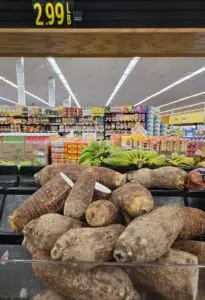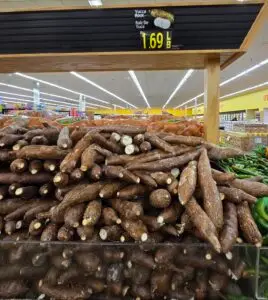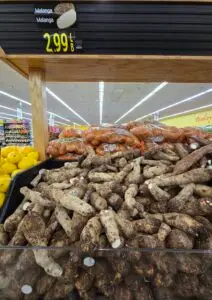
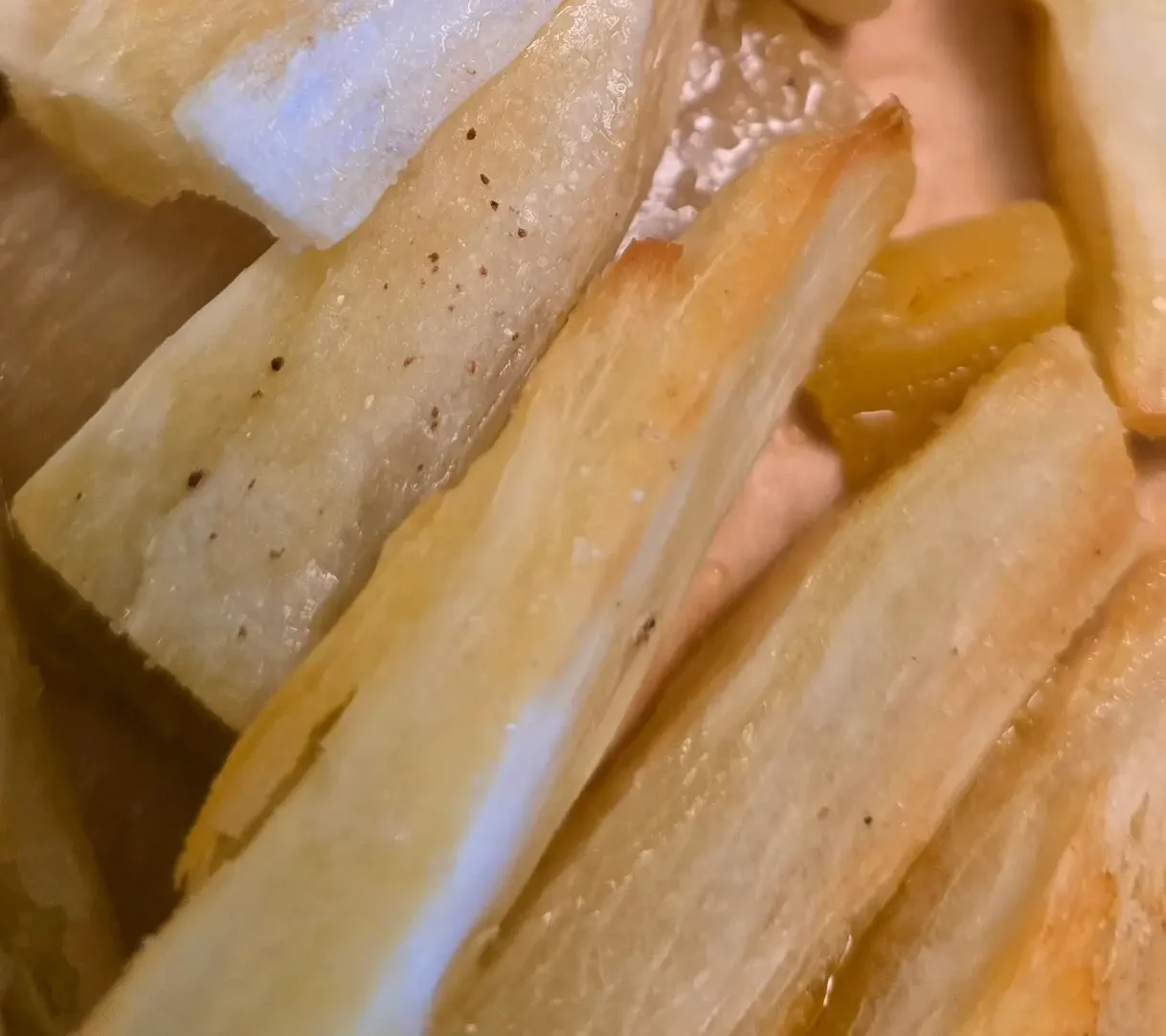
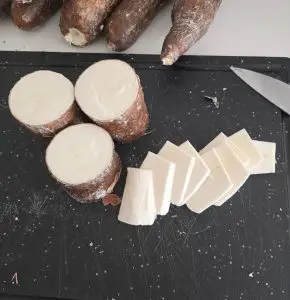
Yucca root, elephant taro root, malanga root, and tropical yams are commonly found in ethnic supermarkets, but not so much in national chains. It’s worth venturing out to find these roots because they are used to make my favorite dipping chips and fries. These low-glycemic starches are high in fiber and nutrients. However, they can be intimidating to work with until you try it. The yucca root looks like a tree branch. Look for roots with bright white flesh. Break off a small piece if you need to. Avoid roots with large black veins or mushy spots. A few thin veins are okay and will blanch out during preparation. It’s also true that yucca root contains cyanide. About 80% of the cyanide is in the bark, which is removed by peeling. However, a significant amount remains. I’ll present three ways to prepare yucca so that it is safe to eat: safe, safer, and safest. Most yuca in the USA is sweet yuca. There is a bitter variety that should never be eaten because the cyanide concentration is too high to be detoxified to a safe level.
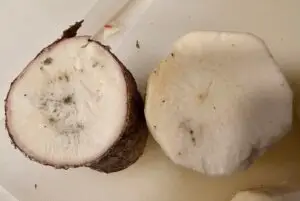
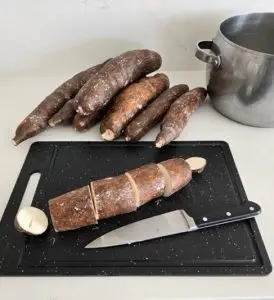
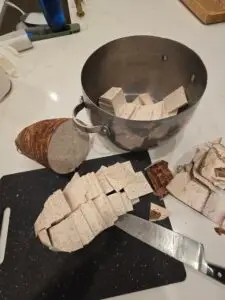
For this step, you will need a strong, thick knife. Cut across to make small logs that are about 1–2 inches long. As you gain more experience, you can make them longer. For now, start out short.
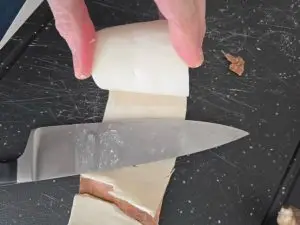
Gently score the bark with the knife, cutting through it without going deeper into the flesh. Rock the blade sideways to split the bark off, and then unroll it. The freshness of the root can be judged by how moist and easy it is to peel. Older roots do not peel as easily, but they are still usable if the flesh is white. Older roots may need the bark shaved off. Keep your fingers clear and use your sharpest knife.
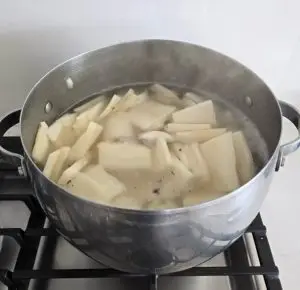
Once all the chips have been cut, rinse and drain them. Refill the pot and select a cyanide detox method.
A safe method is to soak them for at least 20 minutes, then drain and refill the pot. Continue to parboil them.
For an even safer method, soak the chips for 24 to 48 hours, changing the water several times. Then, proceed to the parboiling step.
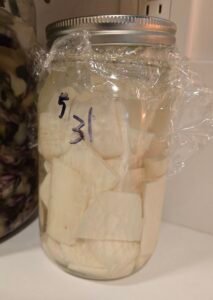
Safest Method: Place the food in a fermentation jar (the type used for fermenting vegetables) and cover it with a 2% salt brine. Ferment for five days. The bacteria in the brine will remove almost all of the cyanide. Then, proceed to the parboiling step.
For parboiling, add a little salt and simmer or boil for at least 20 to 30 minutes. Ventilate the area and use a vent fan to safely remove the hydrogen cyanide gas.
Don’t skip the parboiling step. You can either bring a regular pot to a gentle simmer or add the ingredients to your Instant Pot and set it to slow cook for four hours. Leave the lid off to release the cyanide gases and do this in a well-ventilated area.
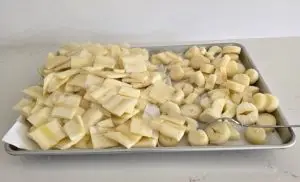
Once the chips are fork-tender, drain them and let them cool on a baking sheet. Arrange them on a different baking sheet to freeze.
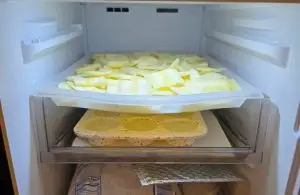
II like to stack them in an organized way to minimize sticking. Then, put them in the freezer overnight. The next day, bag them up in Ziploc bags. See the cooking section for preparation instructions.
It seems like a lot of work, and it is a process, but since I usually prepare seven to nine pounds of yucca at a time, I don’t have to do it often. They are an absolute favorite in the house.
Yucca, malanga, elephant taro, tropical yams, and sweet potatoes can all be made into delicious chips and fries. Compared to yucca, the others are much easier to peel. While they do not contain cyanide, they do contain oxalates. The best way to detoxify them is to pressure cook them instead of parboiling them. Cook them on high pressure for six minutes. Then, cool and freeze them.
Malanga is soft and slimy, yet it makes delicious, crunchy fries. Tropical yam fries, pronounced “nyam,” resemble baked corn puffs. Taro chips and fries are almost as crunchy as yucca and have a slightly fruity flavor. All of these options can be crispy on the outside when doused in olive oil and finished in an air fryer. For extra flavor, soak any variety of fries in olive oil a second time after cooking. Read more about malanga.and taro click here.