
Hydration
Water

After air, water is the most essential substance for life. However, most people do not pay much attention to what they drink, only consuming the beverages they like. I’m sure you’ve heard or said, ‘I don’t like water.’ Did you know that hydrogen is the most abundant element in the human body? Yes, and the second most abundant element is oxygen. Together, they make up H₂O, or water. Proper hydration can significantly impact how you feel, though. The next time you feel sluggish in the afternoon, try drinking half a litre of the hydration formula below. You’ll feel alive again in ten minutes!
Purification
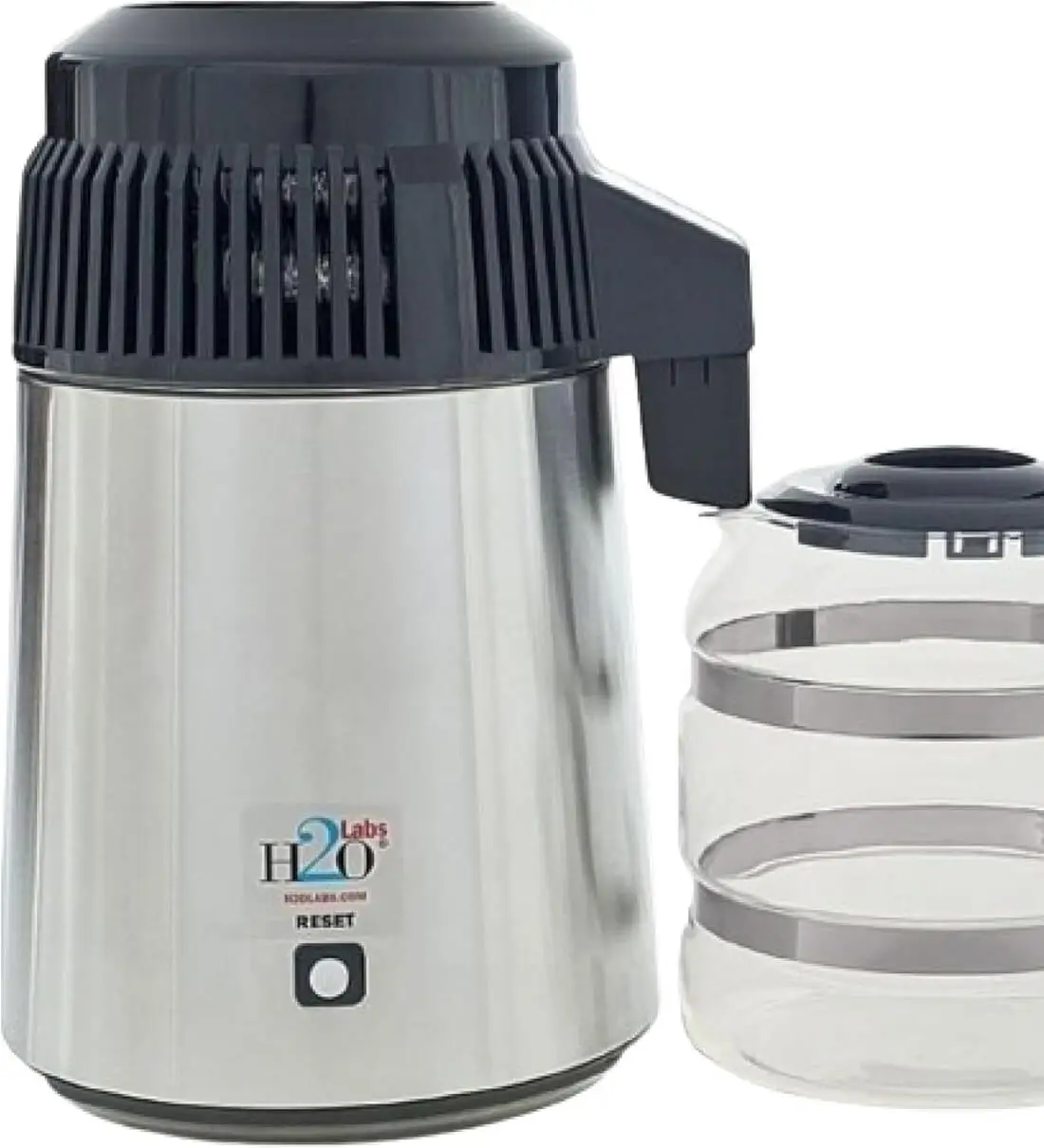
Clean water is essential. The best way to ensure it is clean is to purify it yourself. I prefer distillation and use the H2O Labs distiller pictured here. Reverse osmosis is also effective, but the water is not quite as pure, and the filters need to be changed periodically. It is easier than distillation. If you use filters, try to strike the best balance between cost and effectiveness. Some filters are designed for specific contaminants. You can obtain a free water report to determine which contaminants are present in your water supply. See the link below.
One common complaint about purified water is that it lacks minerals. This is true. However, it’s easy to add minerals back to the water or take mineral supplements. First, purify your water to ensure it is clean, and then add the minerals back in. Check out Dr Dan’s DIY hydration formulas below.
P.S. This is also the secret to making better coffee. There are specific minerals that can greatly improve the taste of coffee. Check out the Coffee module for more information.
Under-HYDRATION
The difference between underhydration and dehydration is rarely discussed. Dehydration is a well-known concept. We are familiar with the feeling of losing too much fluid, which can manifest as sluggishness, headaches and muscle cramps. We recognise the signs of dehydration.
Underhydration, however, is much sneakier. Many of us — probably most — do not drink enough water each day. We experience mild dehydration so often that it becomes normal to us. Yet underhydration, with serum sodium levels of around 143–145, has been linked to obesity and the worsening of several eye conditions, including retinopathy and glaucoma, as well as heart disease. Underhydration is a serious issue. A reasonable daily intake recommendation is about two litres (or thirty-six ounces) for most men, and slightly less for most women. With exercise and in hot weather, this amount should increase by at least another 18 ounces (half a litre). Adequate electrolytes are necessary for good intracellular hydration and to prevent depletion. If you drink water and urinate it out immediately, your cells haven’t had time to absorb it.
Hydration Drinks
Although rehydration and hydration products are available, many of them lack a research basis, contain sugar and are expensive.
Based on trusted sources, here is a recipe for a homemade hydration drink that is as effective as commercial products, if not more so. It costs about 30 cents for 18 oz (0.5 L) and 60 cents for 36 oz (1 L). It ends up at around 100 mOsm/L, in case you’re interested. Osmolarity relates to the concentration of soluble salts in a volume of water. This is important for getting water into your cells because our cells are around 300 mOsm/L. Some authors recommend 200 mOsm/L for maximum water absorption. However, I find this too salty to drink regularly.
The DIY solution adds extra magnesium to address deficiency. If you prefer a sweeter taste, use allulose, stevia, or monk fruit flavorings. Even better are apple cider vinegar, fermented lemon brine, and beet kvass. I personally prefer sparkling water with homemade beet kvass.
Potassium chloride is a good addition before and after a hard workout. However, some medications have a potassium restriction, so it’s possible to consume too much. Therefore, check with your doctor about this, and do not add potassium to every bottle.
Morning Wake Up
My morning hydration routine involves mixing the formula below with one or two tablespoons of apple cider vinegar. I do this every day before my first cup of coffee.
I would also recommend taking Lugol’s iodine, especially when fighting off a cold or traveling. Be sure to pay attention to the concentration, as it comes in 2% and 5% solutions. Use two to four drops of the 5% solution or five to ten drops of the 2% solution. A dropper comes with the bottle, and you should use that.
** These are designed for adults. Pediatric is beyond the scope of this site. **
DIY Hydration Formulas - Adults
Half Liter
Half liter formula-
Baja Gold Fine Sea Salt 1/2 level teaspoon 1.5g
-
Nutricost Mg Bisglycinate 1/2 level teaspoon 1.7g OR
0.8g Mg Chloride -
Mix with 500 mL (18 oz) water, still or sparkling
-
Optional 1/8 teaspoon Potassium Chloride
-
Optional 5-10 grams Creatine powder
or
750mg Creatine HCL
(1 scoop CON-CRET) -
Lugol's Iodine 2 - 4 drops of 5% or 5 - 10 drops of 2%
Full Liter
Full liter formula-
Baja Gold Fine Sea Salt 1 level teaspoon 3.0g
-
Nutricost Mg Bisglycinate 1 level teaspoon 3.4g OR
1.7g Mg Chloride -
Mix with 1000mL (36 oz) water, still or sparkling
-
Optional 1/4 teaspoon Potassium Chloride
-
Optional 5 - 10 grams Creatine powder or 750mg Creatine HCL (Con-CRET)
-
Lugol's Iodine 2 - 4 drops of 5% or 5 = 10 drops of 2%