
Malanga root can be found in Asian or Latin markets. It resembles a large, brown, furry carrot.
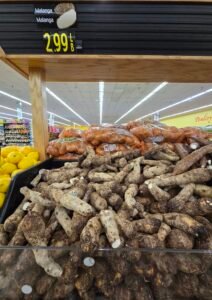
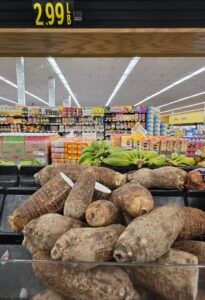
Malanga root and elephant taro root can be found in Asian and Latin markets. Elephant taro can grow to be enormous — I once bought a 15-pound root! Check for soft spots, as they are prone to mold.
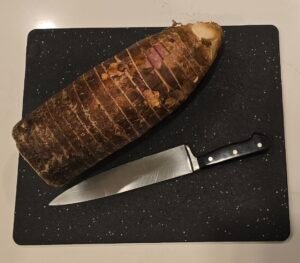
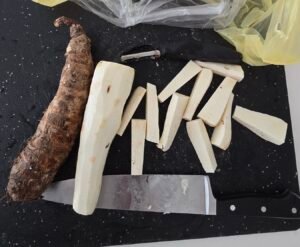
Both roots are prepared the same way and produce delicious, yet different, fries.
Begin by peeling off the outer skin with a potato peeler. Both contain oxalates that must be detoxified before consumption. Do not eat either of these raw. I have not had any issues handling them with my bare hands, but some people are sensitive to oxalates and should wear gloves during preparation.
The malanga will feel slimy. Just rinse it under water as needed so that it doesn’t slip out of your hands. The skin on both roots peels easily.
Cut into fry wedges and or thin chips.
Rinse in water and drain the water.
Place it in a strainer basket in your Instant Pot and pressure cook it for 5-6 minutes. The cooking time depends on how much root is in the pot and how they are cut. Fries usually need 6 minutes while the thin chip style does well with 5 minutes. It is better to do two batches than stuff the basket very full. Both should be fork-tender when done. Avoid overcooking, or they will fall apart. If you overcook them, you can mash and season them like mashed potatoes. If they are undercooked, add another cup of water to the Instant Pot and pressure cook for one more minute.
Pour them onto a baking sheet lined with paper towels. Let them cool.
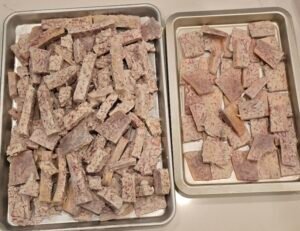
Place them on a baking sheet and freeze overnight.
The next day, break them off and bag them up for later.
Remove from the freezer and place directly into the air fryer pan on parchment paper.
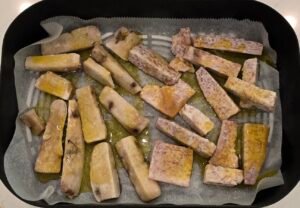
Here they are in the air fryer, covered in olive oil. Malanga is on the left and taro is on the right.

Take a close look at the preparation. Simply douse it with olive oil and salt.
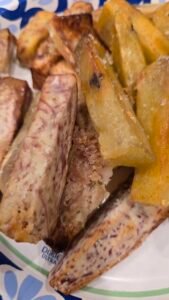
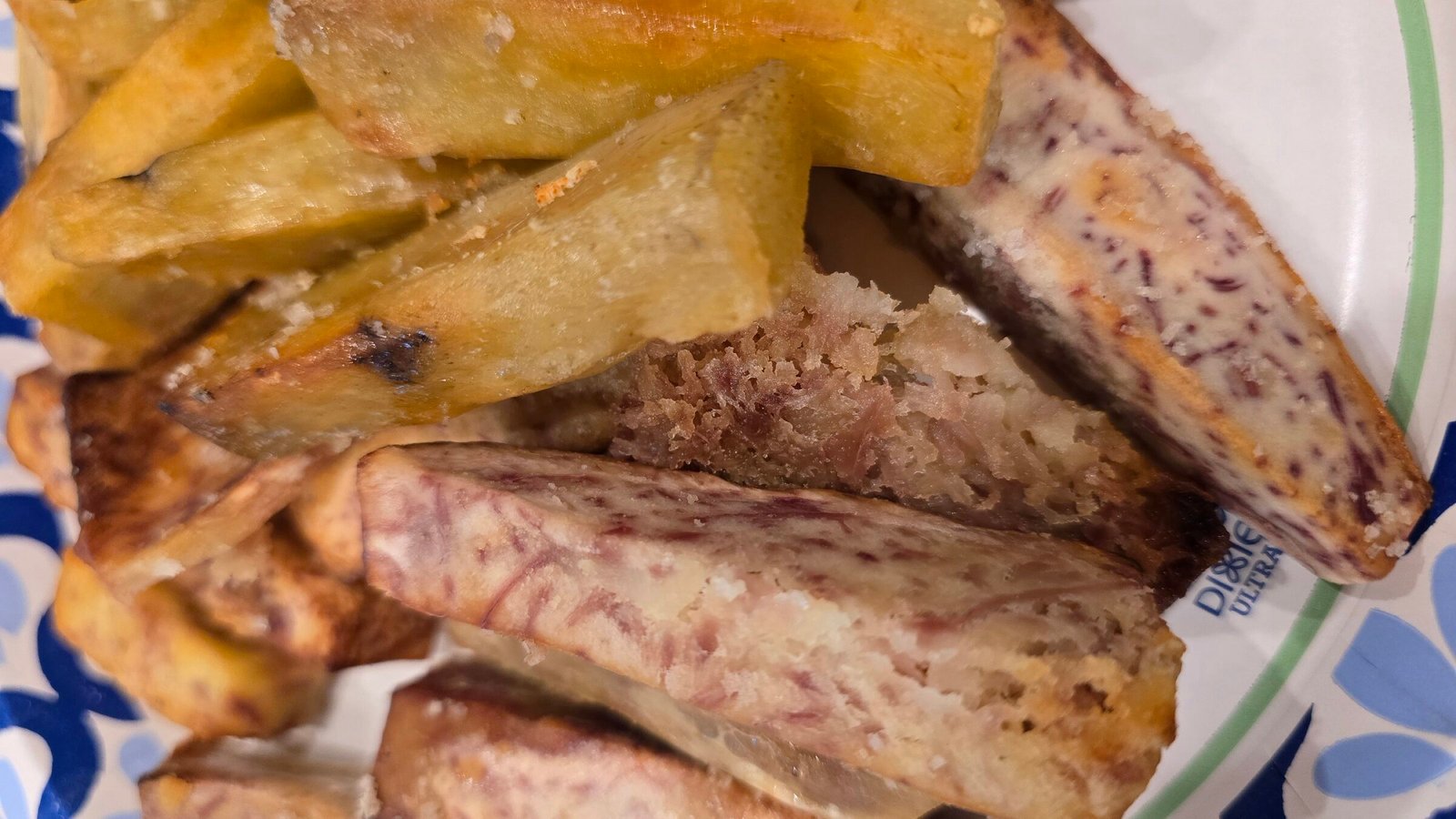
Here are the finished, crispy fries. Notice the color of the taro and the brown exterior of the malanga. Both roots have a lower glycemic index and are higher in fiber and nutrients than potatoes.