
Exercise
Studies have also shown that exercise promotes the growth of healthy bacteria in the gut microbiome. It is more effective than any prescription antidepressant. Other than sleep, few things improve our quality of life as much as exercise does.
Unfortunately, the world of exercise is just as confusing as the world of nutrition. While it’s beyond the scope of this website to delve deeply into the subject, I can offer a few guidelines to help you find your path.
The most important concept is to start where you are today. Do you already have a program? Or are you more like the typical American who doesn’t? Everyone faces mental challenges when starting a program, and some face physical challenges as well. We must all do what we can with what we have.
Should you focus on aerobic training, strength training, or high-intensity interval training (HIIT)?
Ideally, all are recommended for different reasons. An aerobic program benefits your gut microbiome and mental health, especially depression and anxiety, more than HIIT does. I have not seen any resources demonstrating this for strength training alone, so if you must choose one, consider starting with an aerobic program.

Aerobic exercise.
What is “aerobic”? According to most of the resources I’ve found, “zone 2” is where you should be for maximum benefits. You can estimate this zone using the talking test: can you hold a conversation while exercising? Can you perform the activity and sort of hold a conversation? If so, then you are not working hard enough. If you can only squeeze out a few words between breaths, then you are working too hard. Ideally, you should stay in that middle zone for at least 45 minutes, but no more than two hours. The benefits begin to decrease after 90 minutes.
For sedentary individuals who don’t exercise at all, walking is undoubtedly the safest and best way to start. It’s best to have a dedicated pair of walking shoes that are only used for exercise. Consider “barefoot” varieties, as they strengthen your feet and are reportedly better for your knees and hips. However, they require a transition period. Use a dedicated pair of walking shoes. I personally use and recommend Xero Shoes (xeroshoes.com) and Merrell Shoes (merrell.com).
A safe way to start is to walk out at a leisurely pace, turn around, and walk back at an aerobic pace. It’s easy to start out strong and realize that the effort was too intense for your current fitness level, which makes it difficult to get back to the starting point. Set a timer for 10 minutes. Walk out at a leisurely pace, turn around, and pick up the pace to zone 2 on the way back. As your fitness improves, increase the time to 30 minutes. Increase the time spent in zone 2 as your fitness improves. A great start is two days a week, with the goal of working up to three or more days a week. Mall walking is a nice option if the weather is hazardous.
Strength Training:
Strength is useful and important for maintaining function. Studies have shown that it is a key component of continuing to enjoy the activities we love as we age. Lifting weights increases both bone density and muscle mass. Muscle is one of the best regulators of whole body glucose and insulin. Although exercise cannot offset a poor diet, it can enhance the benefits of a healthy diet. I really like the concept of “exercise snacking.” It’s an ideal technique as we age and recover more slowly. The idea is to avoid soreness. Muscles become sore when they are worked beyond the aerobic threshold, which produces lactic acid. “Snacking” on exercise means doing a set of five push-ups, for example, and then brushing your teeth. Do another set on the way to the kitchen. Doing this at various times throughout the day will not overstress the muscles; however, the total number of movements is the same as if they were done all at once. This method builds strength, but not endurance. Endurance is useful only if you need it. Strength training is more useful for your overall health.
Bodyweight calisthenics are a great place to start.
Exercises that use your own body weight, such as standard push-ups and bodyweight squats, are a good place to start. Don’t think of bodyweight exercises as easy or limited. Many people have become impressively strong using these techniques, so not having access to a gym is no excuse.
There are many web resources, and one of my favorites is Calimove (www.calimove.com), another is (www.vanjamoves.com). Technique, technique, technique! I can’t emphasize this enough. Focus on technique, not repetitions. Proper technique maximizes results and minimizes the chance of injury. Consider hiring a qualified coach to help you with your technique. At the very least, record yourself for review. Repetition is useless or harmful if the technique is incorrect. Beware of the numerous YouTube videos demonstrating poorly designed and sometimes dangerous movements.
Check out the new Video Library for some great instructional videos. I’ll add more as I find great examples.
The Crazy Human Hack: Floor Sitting. I learned this from Vanja at vanjamoves.com. Sitting on the floor is a much more natural position for humans. Chairs have been ruining our backs. If you have back pain that isn’t caused by an injury or physical damage, try sitting on the floor for 30 to 60 minutes each day. It will be uncomfortable at first but rejuvenating once it becomes a routine.
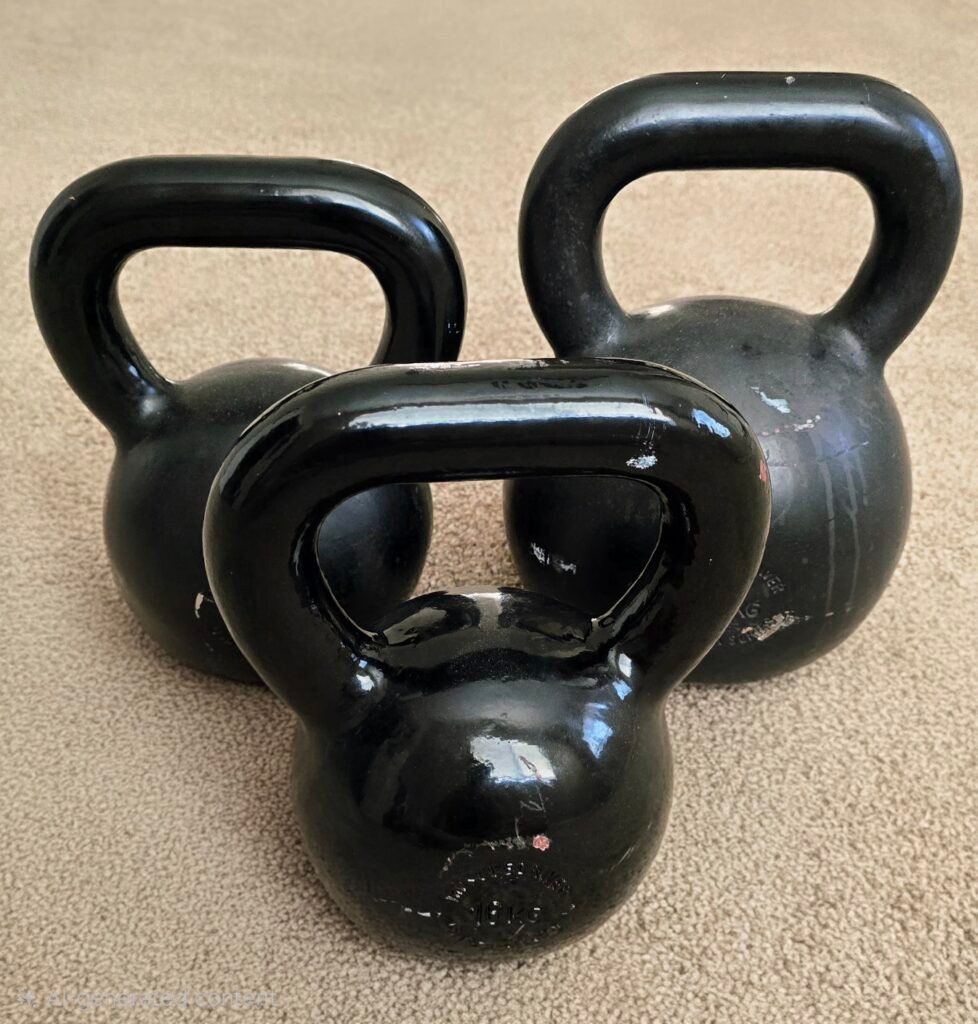
Kettlebells.
I am a huge fan of kettlebells, but with one huge caveat: please hire an instructor. Kettlebell training is one of the most efficient ways to build strength and endurance simultaneously. However, it’s also one of the fastest ways to get injured if done incorrectly. Dragon Door and StrongFirst are my preferred kettlebell authorities, and I use them as my sources.
Check out the new Video Library for some great instructional videos. I’ll add more as I find great examples.

The Best Time of Day to Exercise
The best time to exercise is while you are still in a fasted state. But how will I have the energy to work out, Dr. Dan? The genius of the fasted state is that your body becomes metabolically flexible and can mobilize energy from fat stores more efficiently than if you had eaten and digested a fresh meal. However, this does not happen immediately upon starting the program. It will take your body a few weeks to switch metabolically. Typically, you will know the switch is turned on when you can comfortably fast for 15 hours or more. Start slowly and gradually increase your workout length as your body becomes more efficient at converting fat to energy. Once you’ve fully converted, you’ll be a fat-burning machine, able to go for hours.
Also, it’s important to note that when you “break your fast” after exercising, you should start with protein and fat. This signals your system to build and maintain muscle. Avoid fruits and sugars after exercising. The goal is to maximize the effect of exercise on fat metabolism, not simply replace calories. What about sugar-filled exercise “recovery” drinks? I strongly advise against all forms of liquid sugar, especially after exercising. Rehydration is best achieved with an electrolyte solution. Electrolyte replenishment, not sugar, is needed post-exercise. I use my DIY solution, see the recipe in the Hydration section under Water.