
Easy Instant Pot Eggs
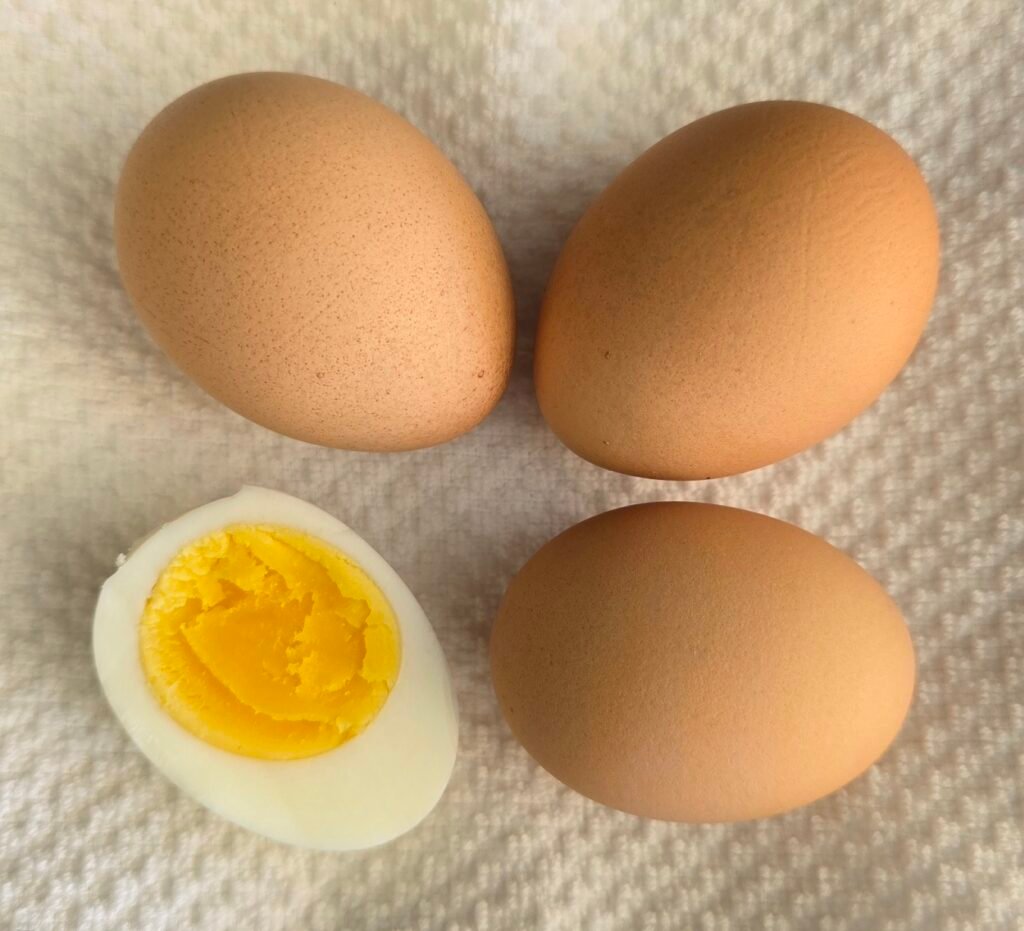
Hard-boiled eggs are quick and nutritious, yet many people have difficulty making them perfectly. Here is a simple way to ensure they are perfectly cooked every time. First, put the trivet in the pot. Add 1 cup of water for a 6-quart pot, or 1.5 cups for an 8-quart Instant Pot. Add as many eggs as you like. Pressure cook high for zero minutes. On some pots you must choose one minute and hit cancel as soon as it reaches pressure, others will allow zero time and auto shutoff. Do not open the steam valve; let it sit. This is called “natural decompression.” Set a timer for 14 minutes if you want your yolks to turn out like this. I think these are slightly over cooked but it’s your egg, your choice. A ten minute rest time will turn out more like this; Reduce the decompression to six minutes and they will look like this; I like both six and ten minute versions. Here’s a side by side comparison; Your Instant Pot may cook differently than my eight-quart model. Try the six, ten, and fourteen minute settings and find your favorite. Once you find the settings you like, this method is perfectly repeatable and very easy. A caveat about eggs: Most eggs sold in the U.S. are inflammatory! It may be tempting to buy discount eggs, but please don’t. Eggs from high-volume factory farms come from chickens fed corn, soy, and often, chemicals to change the yolk color, as well as antibiotics. The best option is local farm eggs, if you can verify that the chickens roam around and feed themselves. Corn- and soy-free eggs are available at Sprouts and Whole Foods. “Pasture-raised” can also mean corn- and soy-fed, and “free-range” just means they have access to an open door. It does not mean they are actually on a pasture. Chickens are omnivores who prefer to eat insects. They do not naturally eat corn and soy. It’s worth paying more for quality eggs. Poor quality eggs will harm your nutrition.
Vegan Kimchi – a four flavor powerhouse
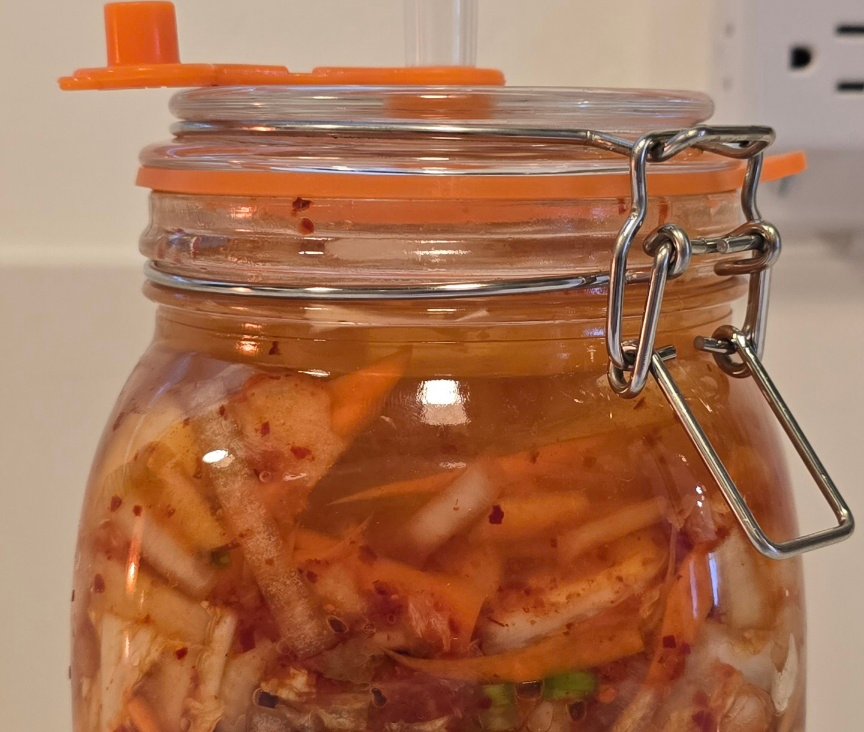
In the world of fermented vegetables, kimchi is a popular Korean dish. This version omits seafood and fish sauce, but they can be added if desired. The advantage of the vegan version is its much lower odor profile, while still maintaining its nutritional value and unique flavors. Kimchi is famous for having all five flavors in one dish: sweet, sour, salty, bitter, and umami. However, this vegan version lacks umami, so consider adding mushrooms for a more authentic taste. Place everything in a bowl and zero out the scale (tare). Then, weigh everything. This will determine how much salt and chili flakes to add later. A 1.5-liter fermentation jar can hold up to 1,000 grams of raw ingredients, and a 2-liter jar can hold up to 1,500 grams. If you have more than your jar can hold, adjust now before processing. The photo shows all the ingredients except the salt. Split and chop the napa cabbage but reserve one leaf for the top. Rough chop onion, and radish. Peel and slice the apple. Julienne the carrot if you want or just slice. Finely chop the garlic and peeled ginger. Place all the chopped ingredients in a bowl and add 2% salt by weight of the original raw ingredients. Multiply your starting weight in grams by 0.02, or use the percent function on a calculator. Sprinkle the salt on top, then hand mix it just like sauerkraut. Let it sit while you clean your kitchen. Allowing a little time for the salt to work helps pull water out of the ingredients. Next, choose your desired level of spiciness using Korean gochugaru chili flakes. There is no substitute for this type of chili pepper. You can find the flakes in Asian markets, but I buy mine on Amazon. One tablespoon of gochugaru chili flakes equals spicy. Two tablespoons of gochugaru chili flakes equals hot. Three tablespoons of gochugaru chili flakes equals very hot. More? You’re on your own! Using either gloved hands or a large spoon, mix in the chili flakes. Add everything to a fermentation jar and pack it down with a “kraut pounder” as you go. Place the reserved whole napa leaf on top, followed by the weight. Press down. If needed, make a 2% saltwater solution and use it to fill the jar so that the water level is about an inch above the weight, but not all the way up. Kimchi expands quite a lot during fermentation. If the brine comes up and out of the bubbler, simply remove the bubbler, wash it, refill it with water, and reinstall it. It is always good practice to place paper towels and/or a tray under the fermenting kimchi. Now comes the hard part—wait ten days. It will taste good after seven days, but the extra time allows the flavors to blend even better. While it’s not wrong to ferment it longer, I can’t promise that the flavor profile will be as pleasing. You might like it, though.
Top Sirloin Steak – sous vide and air fry affordable goodness
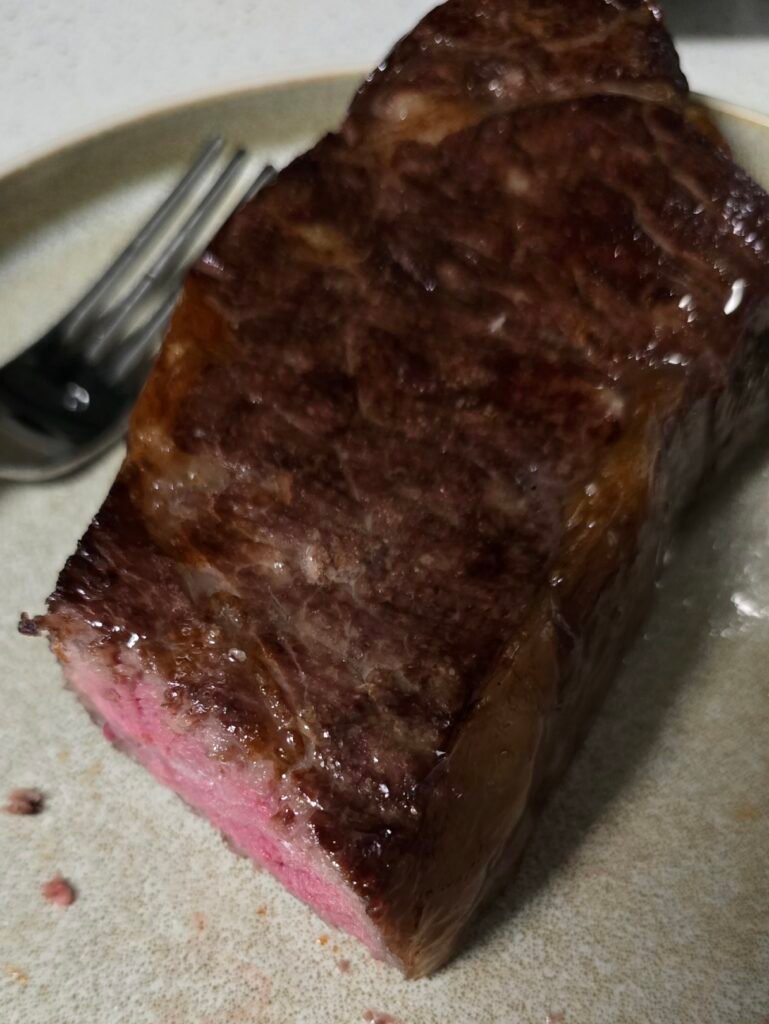
Another affordable cut of meat is top sirloin. You can buy a whole roast and cut your own steaks for even more savings. Even the grass-fed version is at the lower end of the price spectrum. When cooked sous vide and then dry-brined and air-fried, it has the texture of a New York strip steak, but with a bit less flavor. A generous amount of salt helps boost the flavor, but it will never reach NY or Kansas City strip levels. Start with your vacuum-sealed, frozen top sirloin steaks. Place a small trivet on the bottom, add the steaks, and then add water. Fill your sous vide with about two inches of water above the steaks. I like to put a small plate on top to keep them from floating. Set the temperature to 131°F and the time to 2.5 hours (for frozen meat) or 2 hours (for fresh meat). When finished cooking, remove the steaks from the bag and place them on a wire rack on a baking sheet. Sprinkle coarse salt and freshly ground pepper on both sides, then dry brine in the refrigerator for at least 30 minutes, up to overnight. To finish, place them in your air fryer on high and fry for 10 minutes.
“Palmaroni” and cheese – wheat free!
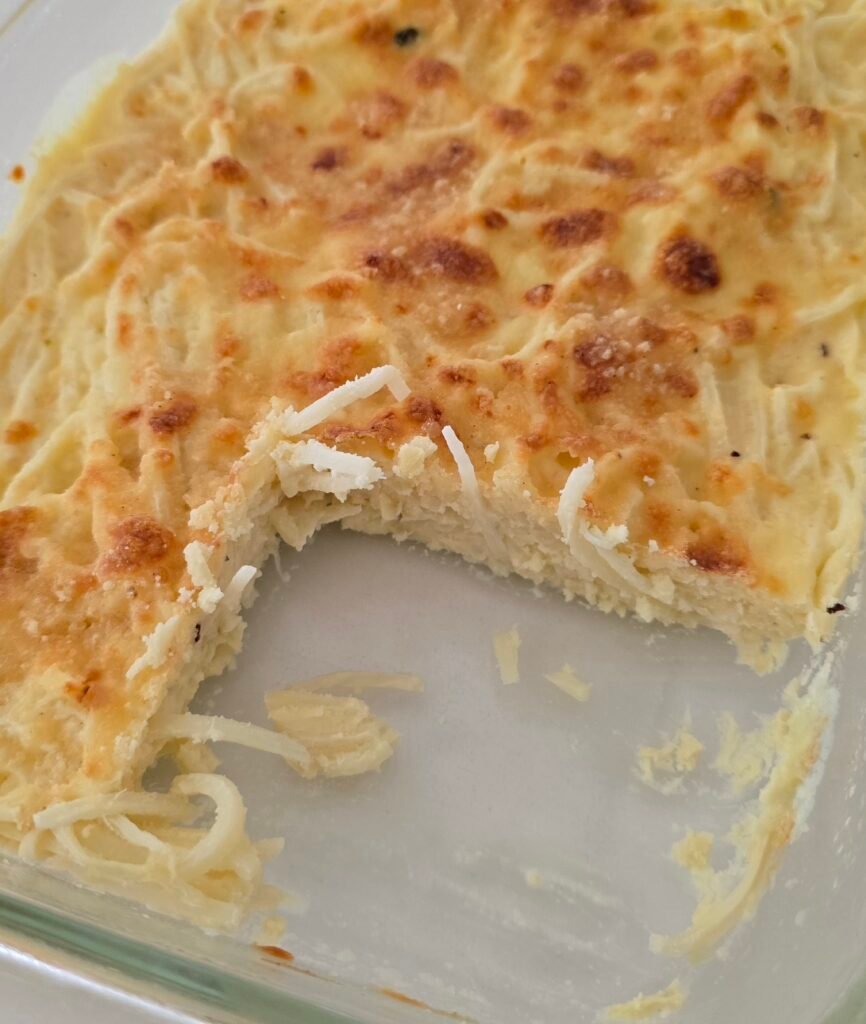
In the cold winter months, nothing hits the spot like a warm dish. Macaroni and cheese is a classic, but it contains a lot of wheat. This version uses Palmini linguine noodles made from hearts of palm—yes, a vegetable! The cheese, flavor, and texture are all authentic! Now, you can enjoy a low-inflammatory version of this classic dish! Ingredients: 2 packages Palmini Linguini noodles 8 oz A2 Grass-fed raw sharp chedder (try for grass-fed even if not A2/A2) 8 oz of grass-fed classic jack or chili jack cheese, split into two parts. The Origin brand is so creamy! 1 teaspoon onion powder 1/2 teaspoon each garlic and mustard powders 1 cup grass-fed half and half or heavy cream 2-4 tablespoons grass-fed butter Pork King Good Pork Rind Crumbs (original flavor) Begin by soaking the Palmini noodles in water. Preheat the oven to 350 degrees Fahrenheit. In a stainless steel pot, shred 8 oz cheddar and 4 oz of pepper jack. Add them to the pot with the half-and-half and spices. Slowly melt over medium-low heat, stirring often. Once the cheese has completely melted, drain the noodles and place them on a baking sheet lined with paper towels. Spread the noodles out on the baking sheet and bake for 5-10 minutes, until dry. It’s important to dry the noodles before adding them to the cheese mixture so that the cheese will incorporate properly and not become runny. While the noodles are drying, increase the heat until the cheese mixture comes to a boil. Watch carefully, and turn off the heat as soon as the mixture begins to bubble. Transfer the dry Palmini noodles to a 9×13 Pyrex baking dish. Pour the cheese mixture over the noodles and spread it around to cover and blend it in with all the noodles. Sprinkle the second 4 oz of jack cheese on top, followed by the pork rind crumbs. Bake until bubbling, about 10 – 15 minutes, then transfer to the top rack and broil until golden brown (3 minutes). Watch carefully and adjust the time per your broiler.
Sous Vide Flat Iron Steak – a budget friendly cut
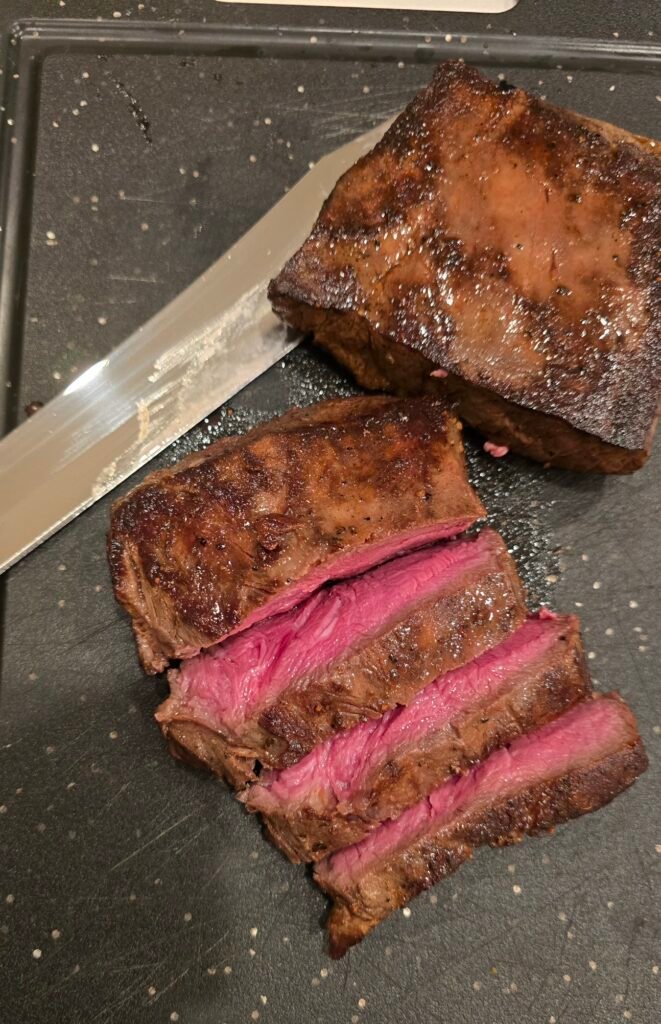
We all love ribeye steak. But with prices soaring, it’s difficult to feed a family. The flat iron steak is one of the more affordable cuts of meat to try. It’s a tougher cut of meat that’s perfect for sous vide cooking. Heat the water to 131°F and cook the steak sous vide for 1 hour and 30 minutes if it is fresh or thawed, or for 2 hours and 30 minutes if it is frozen. When finished cooking, remove the steak from the bag, sprinkle salt on both sides, and place it on a wire rack in the refrigerator for a dry brine. This can take as little as 30 minutes or as long as overnight. To finish, cook in a frying pan or on the grill for 2 minutes per side to achieve a nice color. Slice and enjoy! The flavor and texture is similar to a New York strip steak, but at half the price!
Instant Pot Salmon
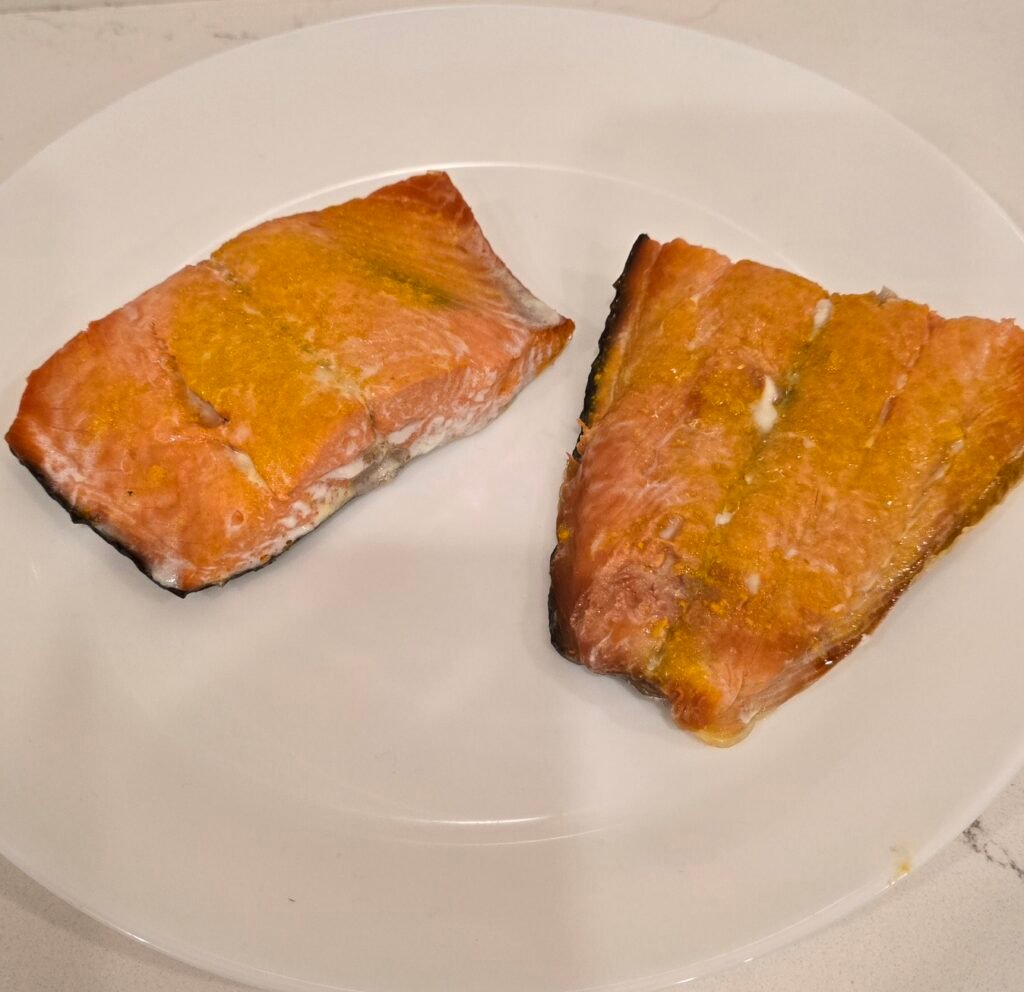
This recipe for perfectly cooked salmon is as easy as it gets. Start with wild-caught salmon and sprinkle it with salt and any other seasonings you like. I often use turmeric. Place the salmon on a wire rack in a pan and refrigerate for at least 30 minutes or up to overnight. Add one cup of water to the pot. Cut the salmon into pieces that are easy to serve and place them in a steamer basket or on the Instant Pot trivet. Set the pot to high pressure for three minutes for well-done, or two minutes for soft, flaky salmon, and start cooking. Quick release and enjoy! The only limitation of this recipe is the small quantity, but the cooking time is short enough to empty and reload for another round.
Probiotic Dairy – AKA Healing Yogurt
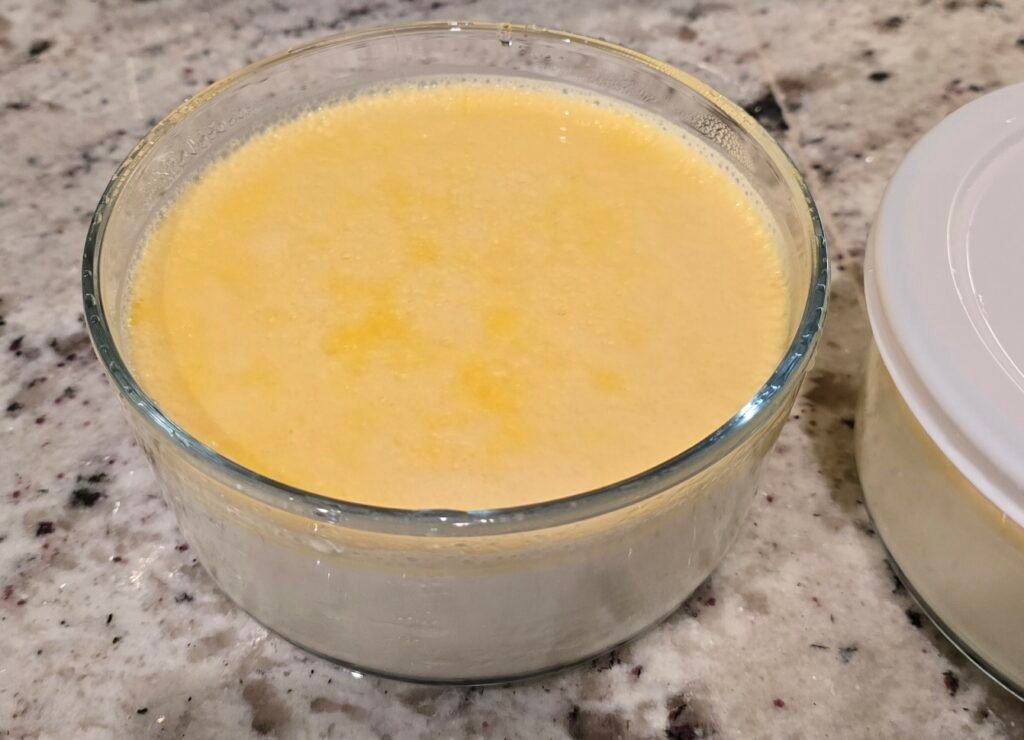
Stay tuned to this post. I am working on recipes to make Dr. Davis style probiotic dairy. It is not technically a yogurt, but is made using the same techniques. The main difference is the use of specified bacteria and a fermentation time of 36 hours which increases bacterial numbers to the twelfth power! Commercial yogurt is not comparable. I’ll update this post with exact recipes and techniques as soon as I have them dialed in. I’ve talked about the benefits of fermented foods in the sauerkraut and kimchi sections. I’ve also warned about the raw components in milk that we don’t want to ingest. Fermented dairy is a different. The fermentation process reduces or eliminates the compounds we don’t want and adds in the beneficial compounds we do want. I’ve been experimenting with different types of bacteria and milk products and am not ready to post the winners just yet. I don’t have enough data yet to talk about some of the health claims but I can tell you this is the most delicious “yogurt” type food I have ever tasted. I won’t be buying much off the shelf yogurt anymore. As with all Dr. Dan recipes, until I have it in my normal food rotation I won’t post it.
Malanga and Elephant Taro Root Air Fries
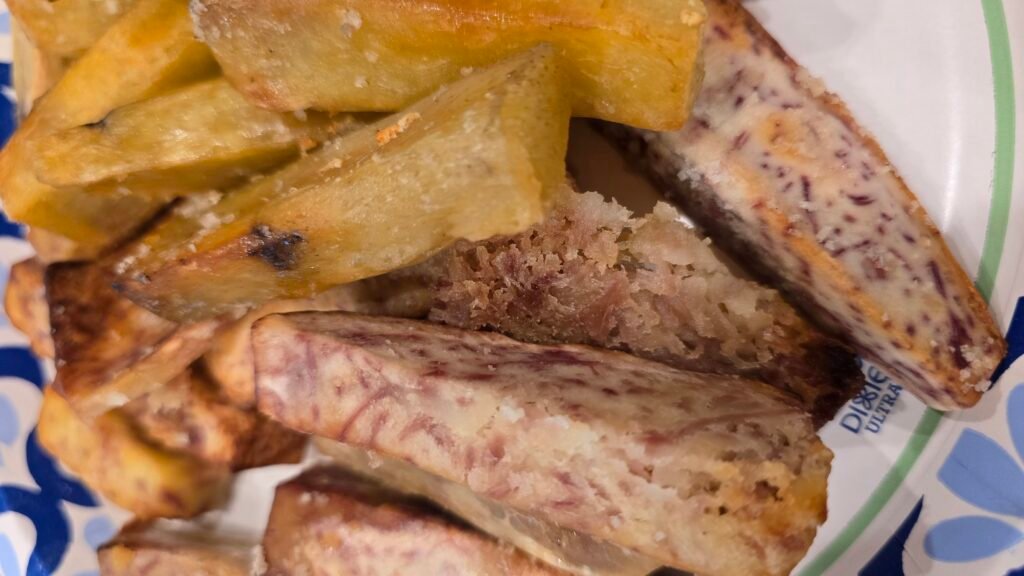
Malanga root can be found in Asian or Latin markets. It resembles a large, brown, furry carrot. Malanga root and elephant taro root can be found in Asian and Latin markets. Elephant taro can grow to be enormous — I once bought a 15-pound root! Check for soft spots, as they are prone to mold. Both roots are prepared the same way and produce delicious, yet different, fries. Begin by peeling off the outer skin with a potato peeler. Both contain oxalates that must be detoxified before consumption. Do not eat either of these raw. I have not had any issues handling them with my bare hands, but some people are sensitive to oxalates and should wear gloves during preparation. The malanga will feel slimy. Just rinse it under water as needed so that it doesn’t slip out of your hands. The skin on both roots peels easily. Cut into fry wedges and or thin chips. Rinse in water and drain the water. Place it in a strainer basket in your Instant Pot and pressure cook it for 5-6 minutes. The cooking time depends on how much root is in the pot and how they are cut. Fries usually need 6 minutes while the thin chip style does well with 5 minutes. It is better to do two batches than stuff the basket very full. Both should be fork-tender when done. Avoid overcooking, or they will fall apart. If you overcook them, you can mash and season them like mashed potatoes. If they are undercooked, add another cup of water to the Instant Pot and pressure cook for one more minute. Pour them onto a baking sheet lined with paper towels. Let them cool. Place them on a baking sheet and freeze overnight. The next day, break them off and bag them up for later. Remove from the freezer and place directly into the air fryer pan on parchment paper. Here they are in the air fryer, covered in olive oil. Malanga is on the left and taro is on the right. Take a close look at the preparation. Simply douse it with olive oil and salt. Here are the finished, crispy fries. Notice the color of the taro and the brown exterior of the malanga. Both roots have a lower glycemic index and are higher in fiber and nutrients than potatoes.
The Sprungl Brunsli
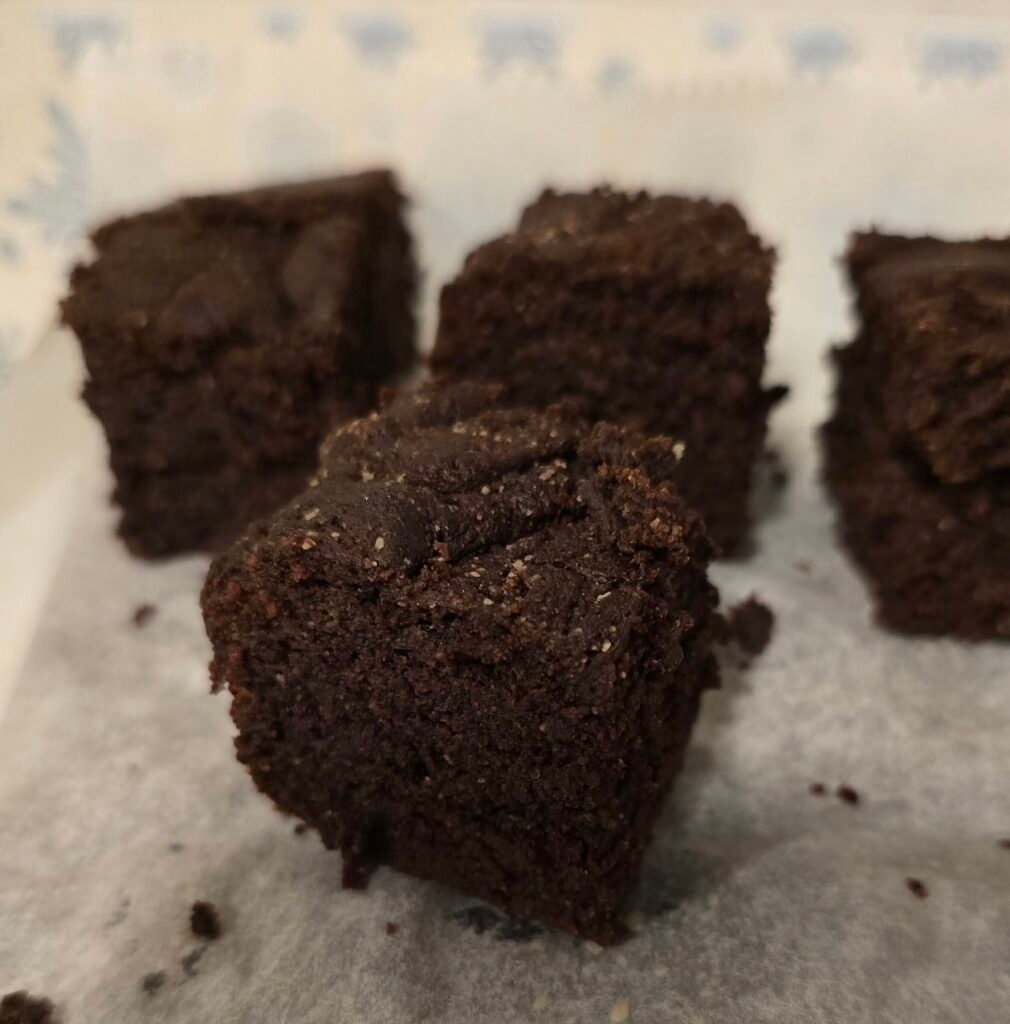
Many years ago, Dr. Dan had a friend named Jeff. Jeff owned a business that imported Swiss chocolate. I had the idea to use that chocolate for brownies. After nearly two years of experimenting, the final result was a success. Of course, this was the 1980s, when we thought that sugar and wheat flour were great. As tasty as the original recipe is, I can’t recommend it today. With the help of Grok AI, I modified the original recipe and substituted healthier ingredients. The result is a brownie that is nearly identical to the original but without the wheat and sugar. However, it still contains refined flours (blanched almond and sorghum), so it is a source of carbohydrates. If you occasionally must have a sweet treat, then give this recipe a try. side note: cocoa is processed cacao beans. Cacao is the pure ground beans. I recommend five 50-gram bars of Lindt 100% cocoa (250g total). You can use another brand of 100% cocoa, but you may need to adjust the amount of butter. For pure cacao powder, use 170 grams of powder and 200 grams of butter. I haven’t found another brand that delivers an amazing chocolate flavor like genuine Lindt. These brownies get their name from the original Lindt & Sprungli chocolate. 250g 100% Cocoa 175g grass fed butter (A2/A2 if you can find it) 170g allulose 4 eggs (corn and soy free if you can get them) 50 g blanched almond flour 50 g sorghum flour 1/2 teaspoon gluten free baking powder (Otto’s naturals grain-free) 1/8 teaspoon salt 2 teaspoons real vanilla extract (vanilla, water, alcohol – no sugar) Method Preheat oven to 325 F Using a double boiler (water in the bottom pot, butter and cacao in the upper pot) melt the butter and cacao together. Stir as it melts and make sure it is completely blended before next step. While butter/cacao are melting, beat the 4 eggs with the 2 teaspoons vanilla in a bowl. Set aside. Weigh the 50g almond and 50g sorghum flour. Add 1/2 teaspoon baking powder, 1/8 teaspoon salt and mix well. Set aside. Weigh the 170g allulose. Once the butter and cacao are fully melted and mixed into a ganache, turn off the heat and remove the pot from the boiling water. Mix in the allulose. This step is critical because it will remove enough heat to safely add the eggs without cooking them. Once the allulose has completely dissolved, pour in the eggs and vanilla and mix thoroughly. This combination will look greasy but will hold together. Scrape the sides well, then add the remaining dry ingredients via a sifter or strainer.. Mix well to blend in all the dry ingredients. Scrape the sides as needed. Line an 8×8-inch metal pan with parchment paper and pour in the batter. Spread it evenly and let it rest for about 10 minutes. For thinner brownies use a 9×9 inch metal pan. Glass bakes different and won’t have the same result, use metal with parchment paper. Bake the 8×8 inch pan for 22 minutes, the 9×9 inch pan 20 minutes at 325 F. Remove and let cool. Then, remove them from the pan and cut them into whatever size squares you prefer. I like to make 16 cubes. Place in a glass container and refrigerate once completely cooled. The flavor and texture will improve over the next several days.
Instant Pot Chicken Broth & Soup
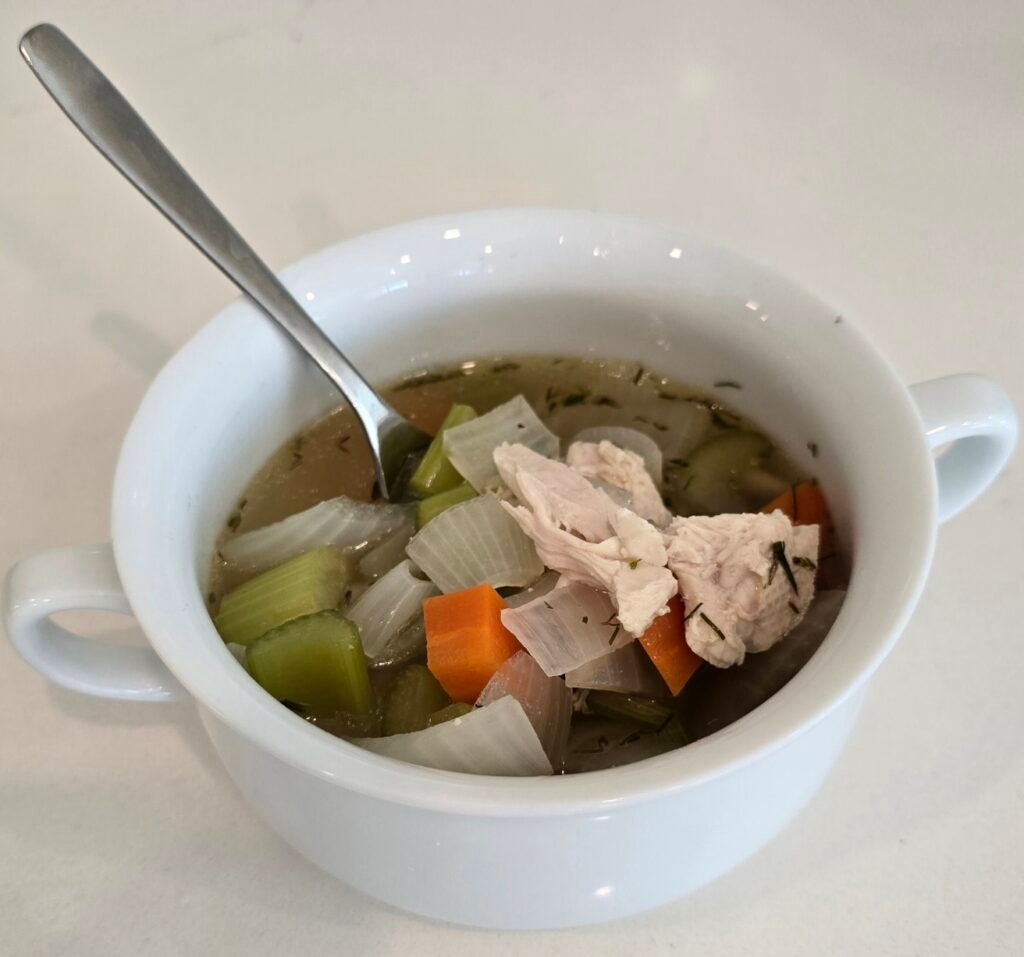
Instant Pot Homemade Chicken Broth and Soup Once you’ve made this broth, you’ll never want canned soup again! Ingredients: 1) One whole pasture-raised chicken, if possible corn and soy free. 2) One bunch of celery 3) One large carrot 4) One large onion 5) Dried thyme 6) Dried dill 7) Quality sea salt 8) Ghee 9) Two cups of water (500 cc), plus an additional two cups reserved. Start by cleaning and chopping the vegetables and setting them aside in a bowl. I used four stalks of celery. Peel and chop one carrot. Coarsely chop one large onion. The texture of the vegetables can be adjusted by changing the size of the pieces. Leave them larger for a crunchier texture, or cut them smaller for a softer texture. Separate the whole chicken into parts. There are many YouTube videos demonstrating this process. Use whichever method works best for you. I prefer to cut the wings at the joints. Then, separate the back from the “crown,” which is the two breasts and bones together. Finally, remove the legs and include the “oyster” meat. The back and rib cage will flavor the broth, which is the base for the soup. If you prefer dark meat in your soup, add the leg quarters. Do not cook the white meat when making the broth because it will overcook. If you prefer white meat, cook it separately. See the sous vide chicken breast recipe for instructions on cooking white meat. I like to vacuum seal and freeze any leftover meat. Set the Instant Pot to sauté and add two tablespoons of ghee. For an Asian flavor, use coconut oil and finish with ginger and scallions. When hot, add the backbone with the skin. If the chicken is small, add the wings as well. Coat the chicken in the melted ghee and leave it alone for about five minutes. The goal is to caramelize the skin for flavor. If you have a second Instant Pot, now is a good time to vacuum seal and sous vide cook the white meat. Add one teaspoon of salt and scrape the chicken loose. Then, add half a cup of water to deglaze the bottom. Use your heavy spatula to scrape it clean. We want that flavor in the broth. Turn the Instant Pot off. Add the remaining water to make 2 cups total. Close the lid. Pressure cook on high for 12 minutes, followed by a 5-10 minute natural decompression. Then, open the pressure release valve. Place the chopped vegetables in a pot along with one to two teaspoons of dried thyme and/or dill. Use whatever flavor you prefer. Add another teaspoon of salt. When the chicken broth is finished, pour it over a strainer placed over the pot of vegetables. Add the remaining two cups of water, stir, and bring to a boil. Watch carefully, and turn off the heat just as the broth begins to boil. While the broth is heating up, pick the dark meat off the wings and back. Reserve it to put into the soup stock. Turn off the heat as soon as it begins to boil, add the dark meat, and cover. Do not stir. Once cooled, add the white meat that has been cooked sous vide and reheat to serve. After refrigerating it, you will see a layer of fat on top. I don’t recommend removing it because it’s very nutritious.